





Shaping the Future of Stress and Wellbeing: Rehumanising the Workplace
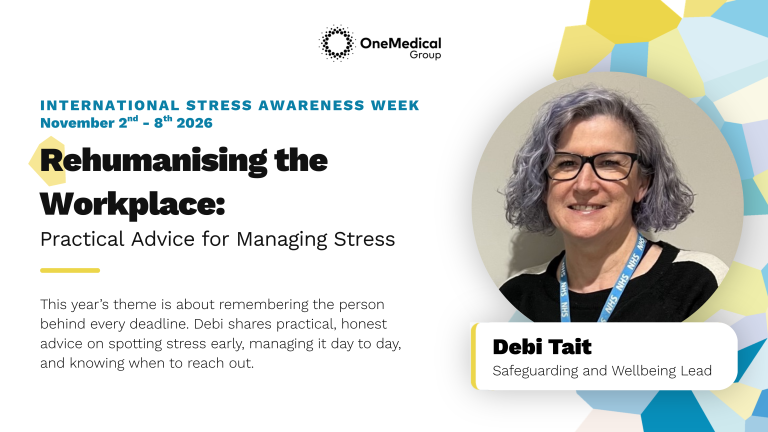
International Stress Awareness Week runs from 2 to 8 November, and this year's theme is "Shaping the Future of Stress and Wellbeing: Rehumanising the Workplace". At its heart, rehumanising work means remembering that behind every inbox, deadline and meeting is a person with a body, a mind and a life outside work.
To mark the week, we asked our Safeguarding and Wellbeing Lead, Debi Tait, for some practical, honest advice on spotting stress early, managing it day to day, and knowing when to reach out.
We asked for a single top tip, Debi couldn't choose just one, so here are two:
Stress rarely arrives all at once. It creeps in through small changes that are easy to explain away. Watch for:
Noticing these signs early gives you the best chance to act before stress builds.
You don't need a quiet room or a long break. This works at your desk.
As Debi puts it, this helps your brain close one tab before opening another.
Some pressure is a normal part of working life. The question is whether you are still recovering from it. Use this simple check to see where you are.
Keep up the habits that are working.
This is the point where self-care, boundaries, workload adjustments or talking to someone can help most.
This is a strong signal to seek support from your GP or another healthcare professional, a counsellor, occupational health, or your employee assistance programme if available.
Amber is the moment that matters most. Small changes made here can stop you reaching red.
The biggest difference comes from steady routines, not big gestures.
"Stress is the same for everyone." It isn't. People experience stress differently depending on their personality, their coping skills and their circumstances. What energises one colleague may overwhelm another, which is why rehumanising the workplace starts with curiosity rather than assumptions.
Time away from work should be recovery time. To protect it:
Stress is evolution's way of warning us about perceived threats. It is designed to keep us safe, and everyone experiences it at some point in their life. Sometimes, though, the perceived threat simply grows too big to handle alone, and reaching out is the sensible next step.
This International Stress Awareness Week, take a moment to check in with yourself and with the people around you. A rehumanised workplace is one where it's normal to ask, "How are you really doing?", and to listen to the answer.
To mark the week, we asked our Safeguarding and Wellbeing Lead, Debi Tait, for some practical, honest advice on spotting stress early, managing it day to day, and knowing when to reach out.
What's your number one tip for someone who's feeling stressed right now, today?
We asked for a single top tip, Debi couldn't choose just one, so here are two:
- Tune into your heart and your breathing. Slow everything down with a deep breath in and a long, slow breath out. Then shrink the day to something manageable by choosing just one goal for today.
- Talk to someone. A colleague, a friend, a manager or a professional. Saying it out loud often takes away some of its weight.
What early warning signs of stress do people most often miss in themselves?
Stress rarely arrives all at once. It creeps in through small changes that are easy to explain away. Watch for:
- Feeling overwhelmed
- Feeling more irritable than usual
- Waking at 3am and struggling to get back to sleep
- Trouble staying on task, where everything feels like a demand
- Holding tension in your body, especially the neck, shoulders and jaw
- Emotional numbness
- Drinking more alcohol
- Changes in appetite: eating more or less, or food losing its taste and texture becoming hard to face
Noticing these signs early gives you the best chance to act before stress builds.
What's a quick technique (under 5 minutes) people can use at their desk or between meetings?
You don't need a quiet room or a long break. This works at your desk.
- Relax your body. Check your neck and shoulders and let them drop.
- Breathe. Breathe in through your nose and slowly out through your mouth. On the in-breath, say to yourself "I am"; on the out-breath, "relaxed". Repeat until you feel calmer.
- Refocus. Ask yourself three questions:
- What meeting or task have I just finished?
- What is the single most important thing in the next one?
- What can wait until later?
As Debi puts it, this helps your brain close one tab before opening another.
How can people tell the difference between everyday pressure and stress that needs more support?
Some pressure is a normal part of working life. The question is whether you are still recovering from it. Use this simple check to see where you are.
Green: busy but coping
- Busy and under pressure
- Coping well
- Recovering between demands
Keep up the habits that are working.
Amber: time to act
- Tired most of the time
- More irritable than usual
- Sleep or concentration affected
- Finding it harder to recover
This is the point where self-care, boundaries, workload adjustments or talking to someone can help most.
Red: seek support
- Symptoms lasting for weeks
- A significant impact on work or daily life
- Feeling overwhelmed, hopeless or unable to cope
This is a strong signal to seek support from your GP or another healthcare professional, a counsellor, occupational health, or your employee assistance programme if available.
Amber is the moment that matters most. Small changes made here can stop you reaching red.
What small daily habit makes the biggest difference to managing stress over time?
The biggest difference comes from steady routines, not big gestures.
- Keep regular sleep times. Go to bed and wake up at the same time each day.
- Eat regularly and well. Choose fresh, healthy food, and cut down on fizzy and caffeinated drinks.
- Get outside every day, even briefly.
- Practise breathwork daily, so it comes naturally when you need it most.
What's one myth about stress you'd like to bust?
"Stress is the same for everyone." It isn't. People experience stress differently depending on their personality, their coping skills and their circumstances. What energises one colleague may overwhelm another, which is why rehumanising the workplace starts with curiosity rather than assumptions.
How can people switch off from work in the evenings and at weekends?
Time away from work should be recovery time. To protect it:
- Leave work at work. Write a to-do list for the next working day so your mind can let go.
- Turn off notifications.
- Step away from social media.
- Fill the space with something restorative:
- Walking outdoors
- Exercise
- Cooking
- Gardening or caring for house plants
- Reading
- Hobbies
- Time with family and friends
- Mindfulness or breathwork
What would you say to someone who feels asking for help is a sign of weakness?
Stress is evolution's way of warning us about perceived threats. It is designed to keep us safe, and everyone experiences it at some point in their life. Sometimes, though, the perceived threat simply grows too big to handle alone, and reaching out is the sensible next step.
This International Stress Awareness Week, take a moment to check in with yourself and with the people around you. A rehumanised workplace is one where it's normal to ask, "How are you really doing?", and to listen to the answer.